
Amber Kelly
Blog


Posted in: Children, Youth and Families, Mental Health | Tags: ResearchPublished in: American Journal of Community PsychologyNatural mentors can promote a sense of belonging and prosocial behavior in youth and may be more easily implementable than formalized mentorships.

Posted in: Marginalized Groups, Mental Health, Public Policy | Tags: ResearchPublished in: American Journal of Community PsychologyIf we return to the definition of citizenship as a sense of belonging to a group, we gain an understanding of “community” as more broad than simple geographical proximity, membership, or identification with a group.

Posted in: Blog, Environment, Public PolicyPublished in: The Community PsychologistA Call to Action by Christopher Corbett Citizens–not politicians–are urgently needed and create the demand for renewable energy. Will you join in the battle to help prevent climate change? In Part I: Community Psychology and the Resist Movement (Corbett, 2017, a), I made the case that there is a moral obligation to resist our elected […]

Posted in: Inspiration | Tags: The Community PsychologistPublished in: The Community PsychologistGod’s calling for social justice by Carlos Luis Zatarain, Edited by Olya Glantsman, Jack O’Brien, & Katie Ramian In 2011, Carlos Luis Zatarain was deciding whether to become a Jesuit priest. By then, he had been involved with the Jesuits in Mexico for 7 years and had even undergone the Spiritual Exercises of St. Ignatius of Loyola. […]

Posted in: Aging, Children, Youth and Families, Immigrant Justice, Marginalized Groups, Public PolicyPublished in: American Journal of Community PsychologyDeportation has numerous detrimental impacts on individuals who are deported, and on the families and communities they are forced to leave behind. This policy statement reviews the empirical literature to describe the effects of deportation on the individual, families, and the broader community, in order to inform policy and practice recommendations.

Posted in: Blog, Violence PreventionPublished in: The Community PsychologistModel legislation provides great opportunity for Community Psychologists to intervene. This is clearly a fitting issue for CPs to take on now, especially in the wake of the gun violence in Parkland, Florida.
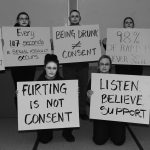
Posted in: Children, Youth and Families, Education, Substance Use, Violence Prevention | Tags: Community Practice BulletinPublished in: Community Practice BulletinWhile guidance from organizations ranging from the American College Health Association to the White House Task Force to Protect Students from Sexual Assault to the Centers for Disease Control recommends that campuses address alcohol and sexual assault, there is limited concrete guidance as to how campus practitioners should actually do so. To address this critical […]

Posted in: Children, Youth and Families, Education, Marginalized Groups | Tags: Community Practice BulletinPublished in: Community Practice BulletinThis article seeks to add a deeper understanding of the context that many first-generation minority college students have endured prior to getting to higher education, specifically the disproportionately high number of Adverse Childhood Experiences (ACEs) and their long-lasting impacts.
Posted in: Blog, Children, Youth and Familiessubmitted by Bernadette Sánchez Recent longitudinal studies show that Black adolescents and adults from low socioeconomic backgrounds who are resilient are also more likely to get physically sick. However, White adolescents and adults from similar backgrounds are immune to this negative outcome. For example, a study of Black, low-income adolescents revealed that those who were resilient (as […]
Posted in: Coalition Building, Mental Health, Self Help | Tags: PracticeEmbodied practice invites people to become informed by their bodies, attuned to their physical needs and experiences, and accepting of their natural selves.