Children, Youth and Families
Issues
Children, Youth and Families
Children, youth, and families are members of many communities which may include neighborhoods, schools, and religious and civic groups. Community Psychologists study the interests of child and adolescents within these communities. Particular attention is paid to development in high risk contexts and especially the impact of urban poverty and community structures on child and family development.
Posted in: Children, Youth and Families, Coalition Building, Marginalized GroupsPublished in: The American PsychologistMost adults report at least one ACE and ACEs disproportionally impact marginalized communities. Supporting community resilience helps promote child development within families, peer groups, schools, and communities.

Posted in: Children, Youth and Families, Poverty and Socioeconomic StatusGroup mentoring is a promising strategy for building resilience among young people vulnerable to school dropout. Mentoring in small groups is more scalable than traditional one-on-one mentoring.
Posted in: Children, Youth and Families, Marginalized GroupsClose, emotional proximity to street gangs provide excitement that can become an addiction. While young males are more likely directly involved in gangs, young women derive excitement from their indirect affiliation and support of gang members.

Posted in: Children, Youth and Families, Public PolicyA brief overview of the current extent and implications of child labor trafficking, why it’s a healthcare issue, and actionable pathways to mitigate the problem.
Posted in: Children, Youth and Families, Education, Marginalized GroupsEarly childhood educational providers need more resources like infant/early childhood mental health consultation.

Posted in: Children, Youth and Families, Mental HealthPublished in: Global Journal of Community Psychology PracticeCreative expression in nature can be empowering for vulnerable groups. There is a growing body of evidence for the benefits of “blue space.”Surf therapy can be a restorative experience, particularly for children with Autism. Body Mapping can be used to help create a richer picture of the potential health and wellbeing outcomes.
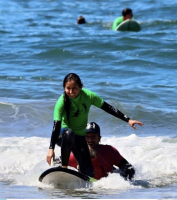
Posted in: Children, Youth and Families, Environment, Marginalized Groups, Mental HealthPublished in: Global Journal of Community Psychology PracticeSurf therapy, an emerging intervention, can increase hope among youth at-promise. Surf therapy is an effective intervention to increase positive self-identity, and feelings of safety and inclusion.

Posted in: Children, Youth and Families, Healthcare, Poverty and Socioeconomic StatusBy linking Community Psychology principles with health information, School-Based Health Centers (SBHC)s represent needed infrastructure when schools re-open after stay-at-home orders related to COVID-19.
Posted in: Children, Youth and Families, Mental HealthPublished in: American Journal of Community PsychologyProtective factors can mitigate the impact of ACEs and are just as important to understand a child’s physical and emotional health.

Posted in: Children, Youth and Families, Marginalized GroupsOf the youth diagnosed with ME/CFS, less than 5% had been previously diagnosed with the illness; a higher percentage being African American and LatinX.